How Casino Supplies Move from Receiving to the Floor
Casino supplies move more smoothly from receiving to the floor when teams match each item to its destination, handling needs and next action.
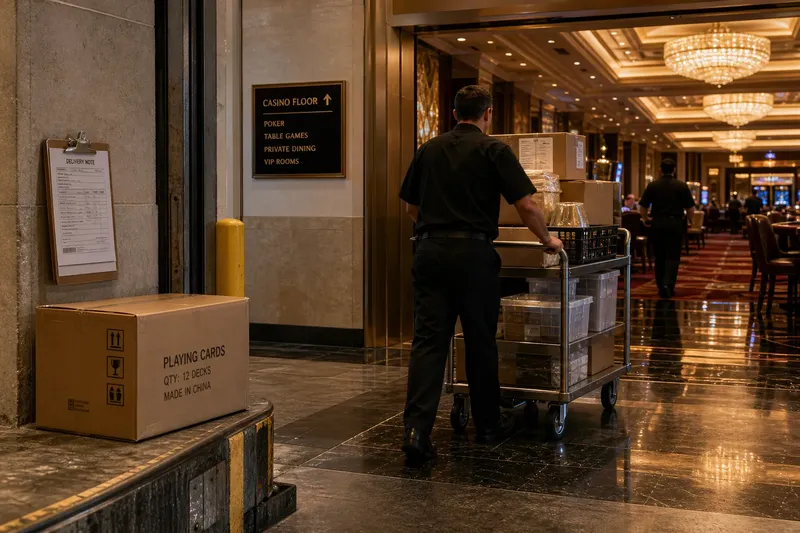
A carton of playing cards waits beside a hotel receiving bay as a banquet trolley rolls past. The route from receiving to casino floor is not just about moving the carton; it is about deciding where it belongs, how it should be handled and what staff need to do before it reaches a table.
Military logistics offers a useful lens: plan the movement around the item’s purpose and destination. In a casino, that means distinguishing supplies that replenish a work area from objects that shape a guest-facing setting, then choosing a route suited to each.
Purpose before movement
Start by asking what job the item will do. A carton of stationery might go to a department cupboard, while a decorative object may need to reach a particular room without being handled repeatedly. Purpose helps determine the destination, the people involved and the kind of care needed along the way.
This is different from simply tracking who has an item. Think of packing a lunch: a sandwich and a glass jar may share a bag, but the jar needs a protected place. The contents shape the arrangement.
Routes by supply type
Consumables, equipment and presentation materials call for different movement plans. Consumables are usually directed towards the team that uses them; equipment may need to reach a named work area; presentation materials may need to arrive in the order and condition required for a room or service setting.
Those distinctions help prevent an item from being sent to the nearest convenient space rather than the place where it will be useful. They also make it easier to choose suitable containers, carts and handling methods.
- Consumables: Check the department and intended use; if both are clear, route the supply there, but if either is unclear, pause and ask the ordering team.
- Equipment: Check the named work area and any handling notes; if they match, use the suitable trolley or carrying method, but if not, confirm the route before moving it.
- Presentation materials: Check the room plan and placement instructions; if they agree, deliver the items in the needed sequence, but if they conflict, ask the room lead to resolve the discrepancy.
- Fragile objects: Check the packaging and the path for obstacles; if protection is adequate, move the object carefully, but if it is not, obtain suitable padding or a safer route.
- Mixed consignments: Check whether the contents serve different teams; if they do, separate and identify each group, but if the contents cannot be distinguished, contact the sender before allocation.
- Unclear destinations: Check the delivery note against the department request; if they match, direct the item accordingly, but if they differ or the request is missing, hold the item in an agreed receiving area and seek clarification.
Choosing the movement method
The route should fit the object and the building. A hand-carried tray may suit a small group of light items, while a trolley can help move boxed supplies through a service corridor. Fragile or bulky pieces may need a clear path and a second person to guide movement, in line with local procedures.
Before dispatch, staff can check the delivery note, destination, packaging and access route. These are practical choices, not a universal form: the aim is to avoid unnecessary transfers and send each item to the people who can use or place it.
A worked route
Say a fictional casino receives six boxed table accessories for a private dining room. The delivery note names the room, but one box has a crushed corner and the room lead has requested only four accessories for the current setup.
The receiving worker records six boxes as arrived, marks the damaged box for inspection and sets it aside from the five intact boxes. They contact the room lead, who confirms that four intact accessories are needed now and that the remaining intact item should stay with the department’s spare supplies. The damaged box remains held for a contents check rather than being included in the room delivery.
The observable result is a delivery of four intact accessories to the named room, one intact item directed to the agreed spare-supply location and one damaged box awaiting a decision. The route follows the room’s actual request without treating every delivered item as part of the same task.
Questions about casino supply routes?
Does a delivery note set the final destination?
It is a useful starting point, but staff should compare it with the department’s current request when the two appear inconsistent. If the destination remains uncertain, ask the responsible team before dispatch rather than guessing.
How should mixed supplies be moved?
Identify which items belong to each department and group them so the destination remains clear during movement. If labels or paperwork do not distinguish the groups, ask the sender or ordering team to clarify before separating them.
What should happen to damaged packaging?
Keep the affected item separate from supplies that are ready to move, and note what was observed. The relevant department can then decide whether to inspect the contents, accept the item or arrange another course under local procedures.
Who decides where an item goes?
The ordering department or designated room lead can clarify the intended use when the delivery details do not settle the question. Receiving staff can explain what arrived and what they observed, so the decision is based on the item’s actual condition and purpose.
Keep routes adaptable
A useful supply route is specific enough to guide movement but flexible enough to account for different items and changing room needs. Clear destinations, suitable handling and a way to resolve mismatches help staff move casino supplies from receiving to the floor without sending every object through an identical sequence.
When the next destination is unclear, the safest practical improvement is often to pause at the point of uncertainty and ask the team that will use the item. That small decision can prevent an unsuitable delivery and keep the route tied to the work the supply is meant to support.