How Gaming Rooms Managed Supplies Before Casino Hotels
Explore how gaming rooms managed supplies before casino hotels by tracing the records, rules and working relationships that shaped service in different venues.
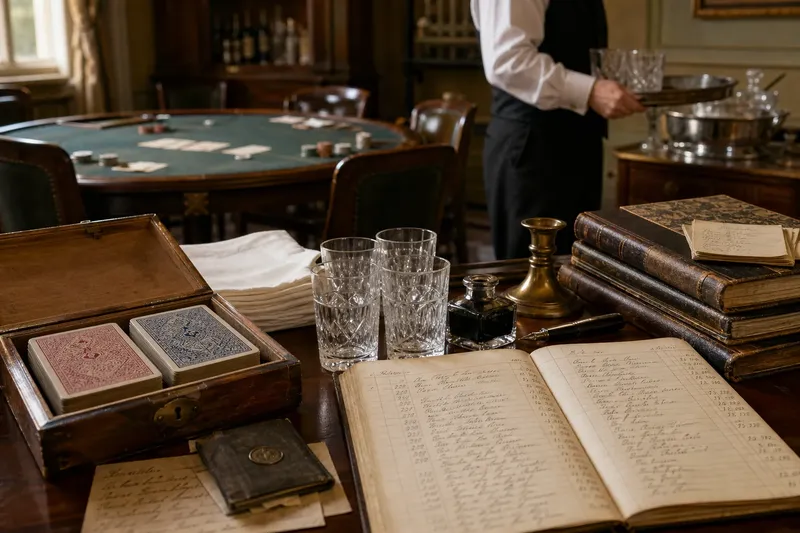
A visitor entering a gaming room might see cards at a table, glasses near a serving area and staff moving between guests. To ask how gaming rooms managed supplies before casino hotels is to ask how those things reached the room and who was responsible for them. The answer depends on the venue and period, so broad claims about one shared system need evidence.
Evidence before generalisation
“Gaming room” covers different settings, from rooms attached to other businesses to dedicated gambling premises. Their legal status, scale and arrangements for food, drink and staffing could differ; without records tied to a particular place and date, it is not sound to describe one standard routine.
Useful evidence may include surviving house rules, account books, inventories, staff instructions, advertisements and descriptions of a named venue. Each source has limits: an advertisement may promote an image of service, while an account book may record purchases without showing how goods were stored or issued.
This distinction matters when comparing gaming rooms with casino hotels. The comparison can raise questions about who supplied goods, who served guests and how responsibilities were organised, but it cannot by itself establish a historical sequence or prove that every venue changed in the same way.
Following the supply trail
A venue’s supplies could involve several relationships: a proprietor might buy goods, a neighbouring business might provide refreshments, or staff might be responsible for particular service tasks. Which arrangement applied is a question for the evidence, not something to infer from the objects alone.
Military logistics offers a useful lens because it draws attention to movement, custody and intended use. The analogy is limited: a gaming room was not a military unit, and its commercial, social and legal setting shaped decisions differently.
For a historian, a ledger entry for card purchases might support a claim about procurement, while a staff instruction could clarify handling. Neither alone establishes a complete operating system; together with other venue-specific records, they may help reconstruct one.
Objects and their records
Cards, serving pieces, furnishings and linens have different histories of use. A purchase record may show that an item entered a venue, but not whether it was held in reserve, placed directly into service, shared with another business or replaced after damage.
That is why records should be read in context. A list of goods becomes more informative when compared with staff roles, room descriptions, rules and evidence of who owned or supplied the premises.
Think of a labelled parcel: its label can tell you where it was meant to go, but not who carried it or whether it arrived. Historical records also preserve only part of the journey.
Questions for the records?
Who supplied the goods?
Look for invoices, accounts, leases or correspondence that name a purchaser or supplier. If those records are absent, describe the supply relationship as unknown rather than assigning it to the proprietor or staff.
Who handled service?
Staff lists, wage records and instructions may identify roles, while descriptions of a venue can offer additional clues. Treat a job title cautiously unless its duties are also documented.
What does an inventory prove?
An inventory can show that listed objects were recorded at a particular time, subject to the document’s purpose and accuracy. It does not automatically reveal where each item was stored or how often it was used.
How can venues be compared?
Compare records from similar places and periods, and state which features are directly documented. Where evidence differs or is missing, preserve that difference instead of turning one venue into a model for all others.
A bounded reconstruction
Imagine a fictional gaming room whose surviving account lists two card packs, a stack of glasses and payment to a neighbouring inn for refreshments. A separate staff note says that one attendant brought refreshments into the room; it says nothing about where the cards were kept.
First, record the account’s concrete entries: two card packs, glasses and a payment to the inn. Next, connect the staff note only to the documented task of carrying refreshments. The resulting reconstruction is that the venue recorded those purchases and used an attendant for that movement; the card storage arrangement remains unknown.
If a researcher later locates a dated room inventory naming a card drawer, that could support a further claim about storage at the time covered by that document. If no such record appears, the careful choice is to leave the question open, not fill the gap with a routine borrowed from another venue.
Reading claims carefully
When examining a proposed account of service before casino hotels, check what each source actually establishes:
- Date and place: Check whether the record names a venue and period; if it does, limit the claim to that setting, but if it does not, avoid presenting it as venue-specific evidence.
- Document purpose: Check whether the source is an inventory, advertisement, account or instruction; if its purpose is clear, interpret it accordingly, but if it is uncertain, qualify what it can support.
- Named responsibility: Check whether a person or role is explicitly connected to a task; if so, attribute only that task, but if not, leave responsibility unassigned.
- Object status: Check whether the record says an item was purchased, stored, issued or used; if it names a status, use that wording, but if it merely lists the item, do not infer its next use.
- Independent support: Check whether another source confirms the same detail; if it does, explain how the records complement each other, but if it does not, identify the claim as resting on a single source.
- Missing information: Check which part of the supply process the documents omit; if a gap remains, state it plainly, but if another record addresses it, add only the detail that record supports.
These checks make comparisons more useful, not less. They separate documented practice from reasonable questions and prevent a modern inventory habit from being mistaken for evidence of an earlier one.
The phrase how gaming rooms managed supplies before casino hotels works best as a research question tied to named venues and surviving records. That approach can reveal how procurement, service and responsibility differed, while leaving room for the local arrangements the evidence does not preserve.